Modern Day Prohibition
Climax
Modern Day Prohibition: Is the War on Marijuana Failing?
Thoughts by Rheanna Martinez
America has been saturated with years of public service announcements that criminalize and instill fear around drugs. It’s no surprise that we’ve withdrawn ourselves from conversations of recreational marijuana—not to mention the progressively more popular topic of legalization. Yet smokers and non-smokers alike have begun to push these boundaries and speak the truth that the war on marijuana just isn’t working.
Recent conversations on the legalization of marijuana should also remind us of a not so distant parallel past in the repeal of Prohibition. Prohibition was far from the intended moralistic and conservative society. Instead, days were filled with increased drinking, illegal bootleggers, and distribution overrun by crime mobs. People didn’t stop drinking with the threat of punishment; instead they stopped obeying the law. Eventually they demanded a repeal. Prohibition should have taught us an important lesson – repression doesn’t work.
And yet, today we employ the same tactics used then to stoke fears based on prejudices, questionable studies, and criminal punishment. President Nixon declared the War on Drugs four decades ago, investing nearly $1 trillion to promote zero tolerance policies. But with headlines of morbid drug war violence, black-market kingpins, and high incarceration rates, how successful have we been?
Despite tough anti-drug laws, the U.S. has the highest level of illegal drug use in the world. More than half a million of our incarcerated are behind bars for a drug law violation, nearly 45,000 of them locked up for marijuana possession at an average cost of $30,000 per year.
And let’s talk the global drug trade—drug cartels. According to U.S. officials, upwards of 60% of cartel revenue came from marijuana in 2009.
Still politicians are afraid to speak about policies that might actually work like decriminalization. But much like the repeal
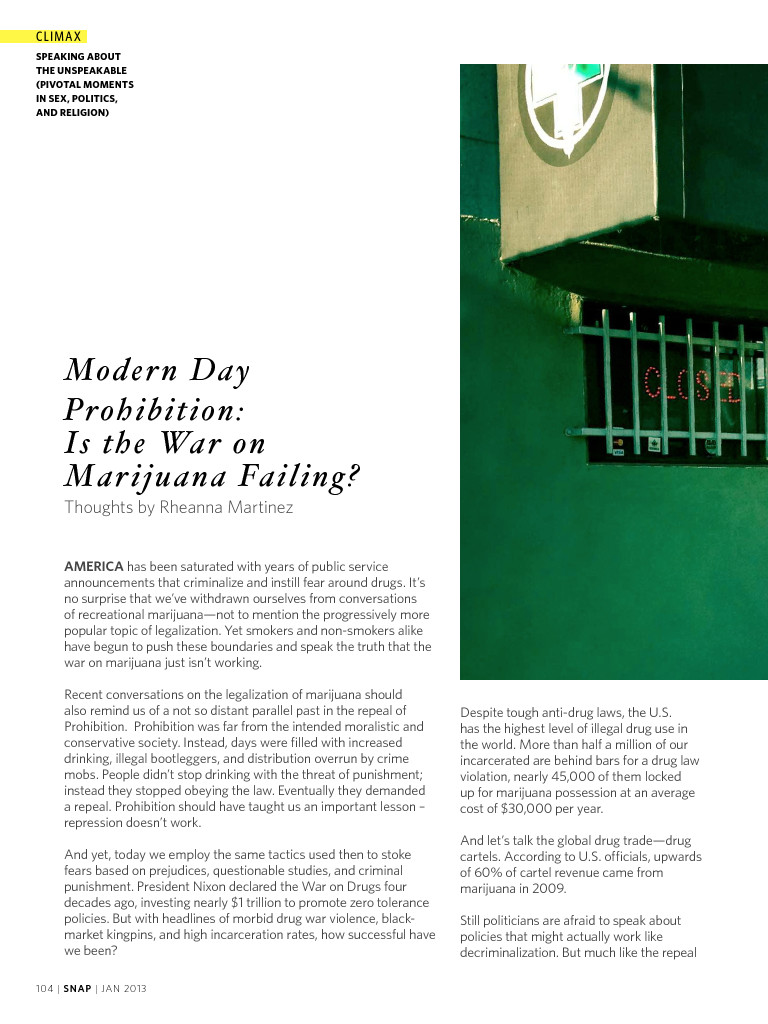
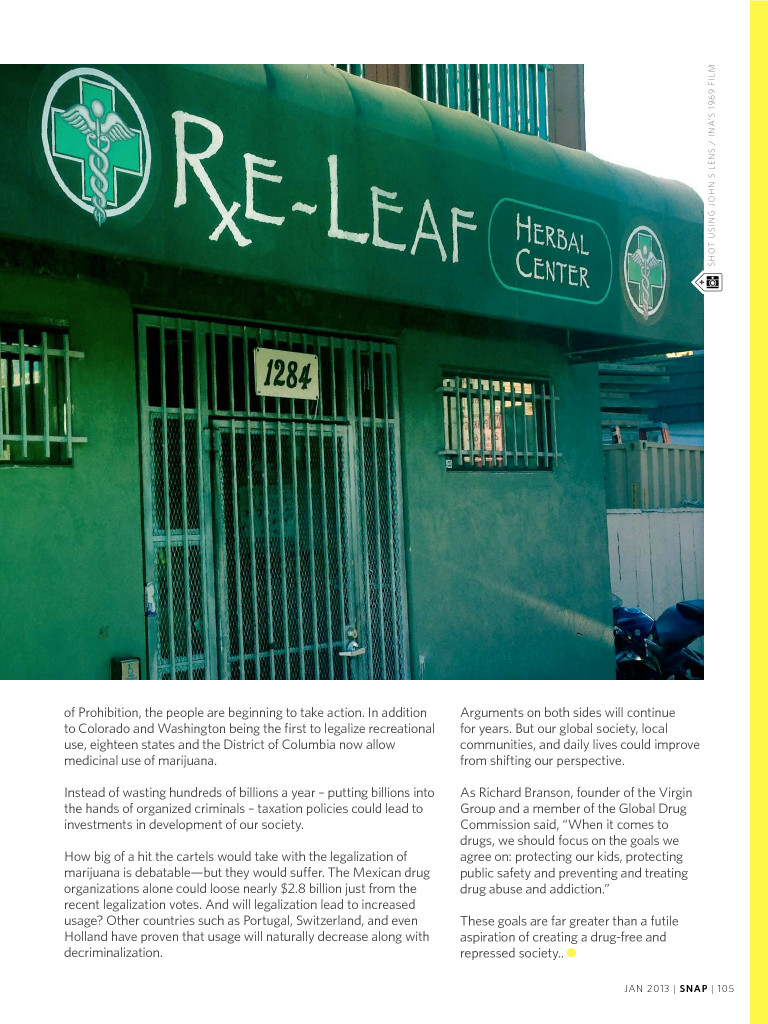
of Prohibition, the people are beginning to take action. In addition to Colorado and Washington being the first to legalize recreational use, eighteen states and the District of Columbia now allow medicinal use of marijuana.
Instead of wasting hundreds of billions a year – putting billions into the hands of organized criminals – taxation policies could lead to investments in development of our society.
How big of a hit the cartels would take with the legalization of marijuana is debatable—but they would suffer. The Mexican drug organizations alone could loose nearly $2.8 billion just from the recent legalization votes. And will legalization lead to increased usage? Other countries such as Portugal, Switzerland, and even Holland have proven that usage will naturally decrease along with decriminalization.
Arguments on both sides will continue for years. But our global society, local communities, and daily lives could improve from shifting our perspective.
As Richard Branson, founder of the Virgin Group and a member of the Global Drug Commission said, “When it comes to drugs, we should focus on the goals we agree on: protecting our kids, protecting public safety and preventing and treating drug abuse and addiction.”
These goals are far greater than a futile aspiration of creating a drug-free and repressed society..
Delicious