
Electronic Music
Years in the making, but how long will this new mainstream sound play in our headphones?
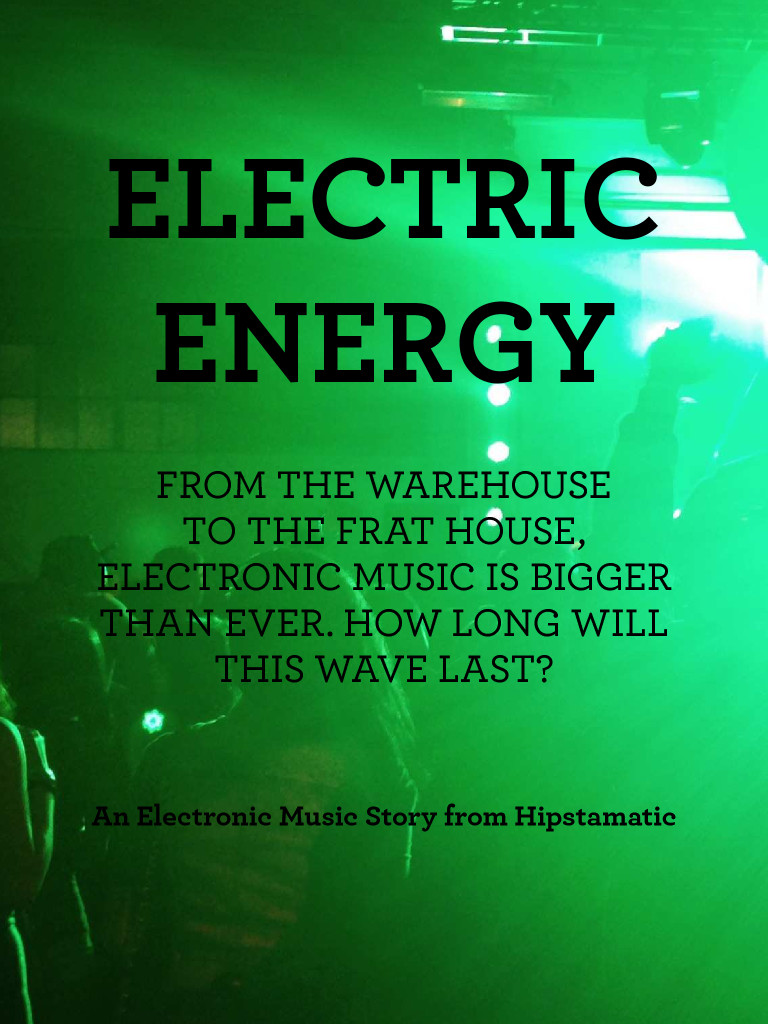
Electric Energy
From the Warehouse
To the Frat House, Electronic Music Is Bigger Than Ever. How Long Will
This Wave Last? An Electronic Music Story from Hipstamatic
Ten years ago, acts like Britney, Christina, and Ja Rule were dominating radio and selling out arenas. However, there was an underground music movement long in motion that you had to know about to belong: the electronic music scene.
Flash forward a decade, and electronic music is dominating U.S. radio. Electronic producer and DJ collaborations with major pop
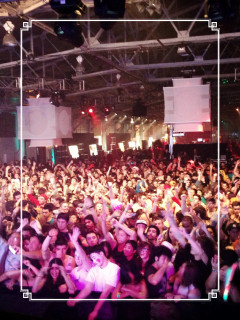
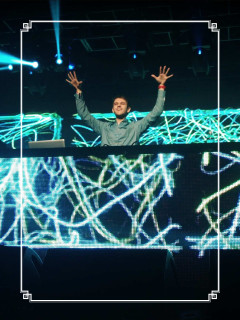
stars like Rihanna, Justin Beiber and Nicki Minaj, have put a spotlight on the genre like never before. Pop stars who could once sell out arenas are canceling tours due to low ticket sales, meanwhile artists like Bassnectar are selling out 9,000 seat venues for multiple nights in mere minutes. Music festivals like Electric Daisy Carnival and Ultra Music Festival draw people from around the world, and the experience isn’t like warehouse parties from the past—it’s a visionary spectacle with ferris wheels, leds for days, and enough fur vests and boots to warm the entire town of Detroit.
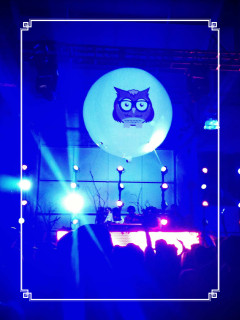
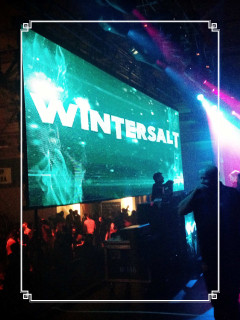
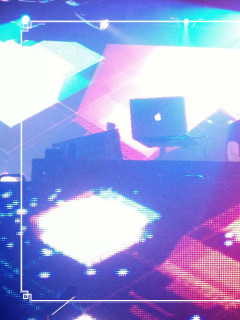
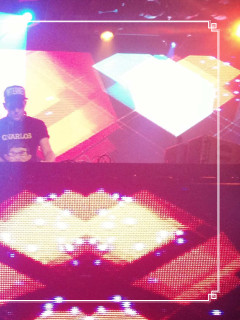
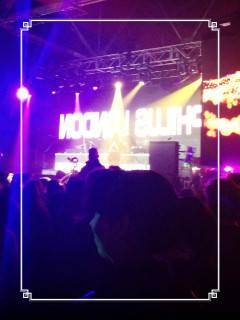
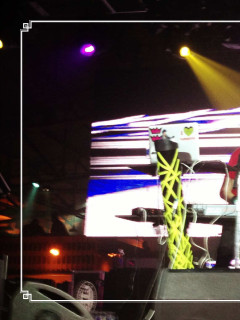
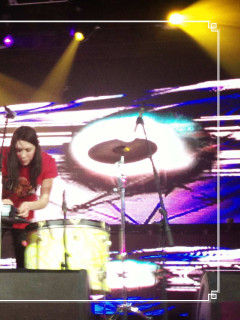
To get a glimpse into today's scene, we headed to Wintersalt, the music and arts festival put on by Eye Heart SF and Blap Productions.
Sure, there were hip hop artists on the bill (K. Flay, Theophilus London), but the artists getting top billing were Diplo, Zedd, Dillon Francis, among other electronic acts. Electronic music has gone from the side tents at music festivals to the main attractions—but why—and how long is this wave going to last?
We talked to DJs, producers, and industry insiders who are at the forefront of the electronic groundswell to hear what they had to say.
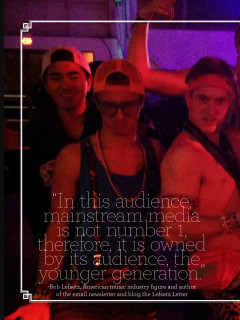
“In this audience, mainstream media is not number 1, therefore, it is owned by its audience, the younger generation.”
“There were several mainstream artists that saw the potential of incorporating electronic music into their repertoire and this really helped push the genre to the forefront. One example that really stands out in my mind is Kanye sampling Daft Punk which exposed the hip hop and pop communities to the concept of using electronic music. I think Deadmau5 and Justice also played major roles in exposing the masses to electronic music and additionally there were pop singers such as Lady Gaga who started using house beats in their music which wasn't really done until recent years in the U.S. Europe and other countries around theworld have been listening to electronic music for years and I feel like we're a bit behind the trends here.”
“One thing we started seeing with the more yuppie and mainstream crowd is that they started going to something like Coachella, for example. And, maybe Deadau5 was playing, and they were in this new atmosphere, and now they are being exposed to these new mainstream, electronic artists. Then, with the Internet, we have girlfriends who 3 or 4 years ago were listening to top 40 rap music at the club, and now they are finding new DJ producers on Soundcloud who most folks who are ‘in the know’ don’t even know yet...that wasn’t even possible 3 years ago.”
“The curators of the scene, Electric Daisy Carnival, Coachella, they are really into making sure the audience is treated properly.” -Bob Lefsetz, American music industry figure and author
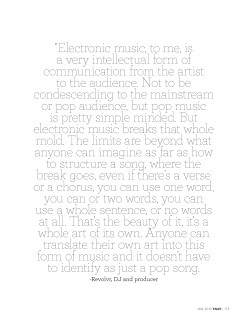
“Electronic Music, to Me, Is a Very Intellectual Form of Communication from the Artist
to the audience. Not to be condescending to the mainstream or pop audience, but pop music is pretty simple minded. But electronic music breaks that whole mold. The limits are beyond what anyone can imagine as far as how to structure a song, where the break goes, even if there’s a verse or a chorus, you can use one word, you can or two words, you can use a whole sentence, or no words at all. That’s the beauty of it, it’s a whole art of its own. Anyone can translate their own art into this form of music and it doesn’t have to identify as just a pop song.
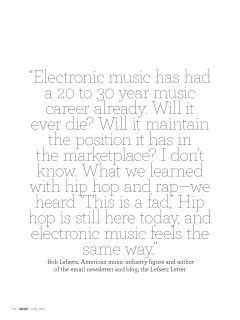
“Electronic music has had a 20 to 30 year music career already. Will it ever die? Will it maintain the position it has in the marketplace? I don’t know. What we learned with hip hop and rap—we heard ‘This is a fad,’ Hip hop is still here today, and electronic music feels the same way.”
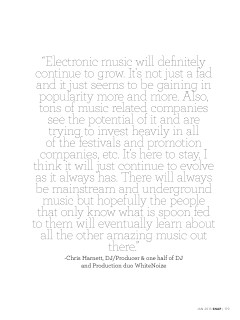
“Electronic music will definitely continue to grow. It's not just a fad and it just seems to be gaining in popularity more and more. Also, tons of music related companies see the potential of it and are trying to invest heavily in all of the festivals and promotion companies, etc. It's here to stay. I think it will just continue to evolve as it always has. There will always be mainstream and underground music but hopefully the people that only know what is spoon fed to them will eventually learn about all the other amazing music out there.”