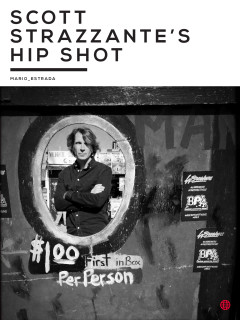

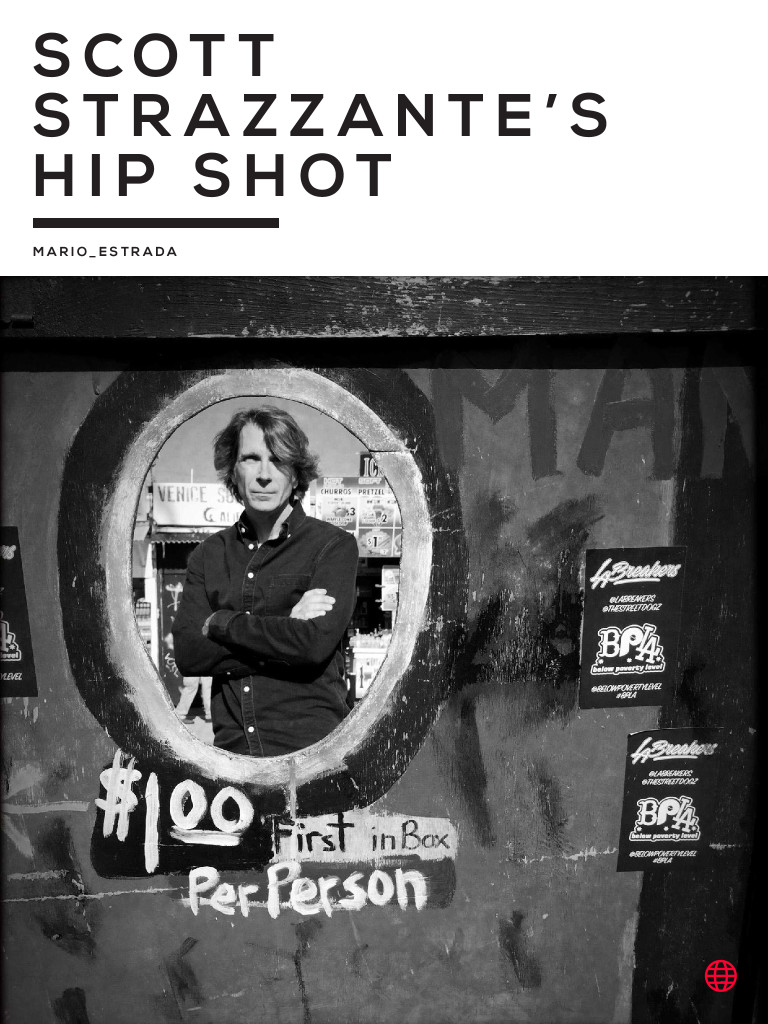
Scott Strazzante’s Hip Shot
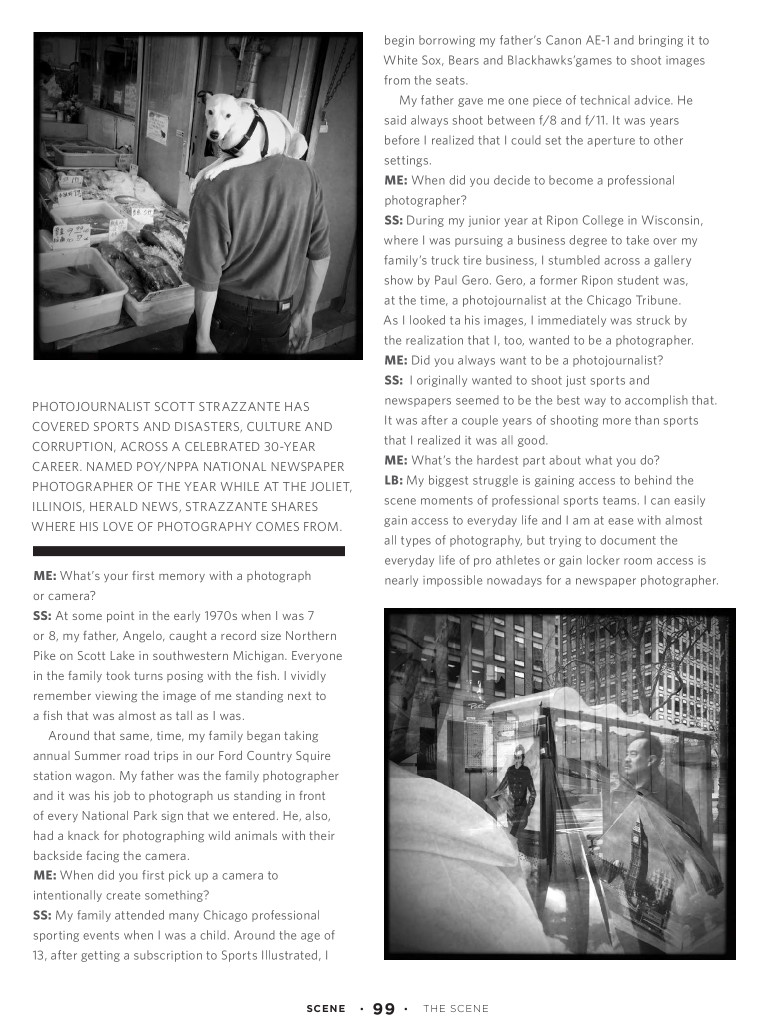
Photojournalist Scott Strazzante has covered sports and disasters, culture and corruption, across a celebrated 30-year career. Named poy/nppa national Newspaper Photographer of the Year while at the Joliet, Illinois, Herald News, Strazzante shares where his love of photography comes from.
begin borrowing my father’s Canon AE-1 and bringing it to White Sox, Bears and Blackhawks’games to shoot images from the seats.
my father gave me one piece of technical advice. He said always shoot between f/8 and f/11. It was years before I realized that I could set the aperture to other settings.
Me: When did you decide to become a professional photographer?
ss: During my junior year at Ripon College in Wisconsin, where I was pursuing a business degree to take over my family’s truck tire business, I stumbled across a gallery show by Paul Gero. Gero, a former Ripon student was, at the time, a photojournalist at the Chicago Tribune. As I looked ta his images, I immediately was struck by the realization that I, too, wanted to be a photographer. Me: Did you always want to be a photojournalist? ss: I originally wanted to shoot just sports and newspapers seemed to be the best way to accomplish that. It was after a couple years of shooting more than sports that I realized it was all good.
Me: What’s the hardest part about what you do? lb: My biggest struggle is gaining access to behind the scene moments of professional sports teams. I can easily gain access to everyday life and I am at ease with almost all types of photography, but trying to document the everyday life of pro athletes or gain locker room access is nearly impossible nowadays for a newspaper photographer.
Me: What’s your first memory with a photograph or camera?
ss: At some point in the early 1970s when I was 7 or 8, my father, Angelo, caught a record size Northern Pike on Scott Lake in southwestern Michigan. Everyone in the family took turns posing with the fish. I vividly remember viewing the image of me standing next to a fish that was almost as tall as I was.
Around that same, time, my family began taking annual Summer road trips in our Ford Country Squire station wagon. My father was the family photographer and it was his job to photograph us standing in front of every National Park sign that we entered. He, also, had a knack for photographing wild animals with their backside facing the camera.
Me: When did you first pick up a camera to intentionally create something?
ss: My family attended many Chicago professional sporting events when I was a child. Around the age of 13, after getting a subscription to Sports Illustrated, I ME: When do you decide to use your phone vs. slr? ss: I use my iPhone for street photography and for the occasional feature photo at a sporting event. Now and again, I will use the iPhone to give a different look to a portrait or feature event, but the vast majority of my daily work at the San Francisco Chronicle is with a Canon eos 1-D X.
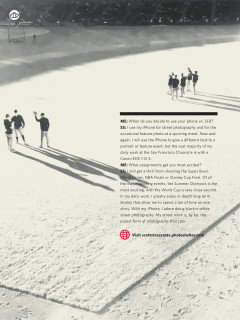
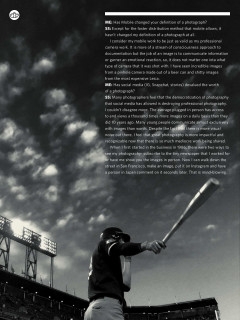
Me: What assignments get you most excited? ss: I still get a thrill from shooting the Super Bowl, World Series, nba Finals or Stanley Cup Final. Of all the major sporting events, the Summer Olympics is the most exciting, with the World Cup a very close second. In my daily work, I greatly enjoy in-depth long term stories that allow me to spend a ton of time on one story. With my iPhone, I adore doing black-n-white street photography. My street work is, by far, the purest form of photography that I do.
Visit scottstrazzante.photoshelter.com me: Has Mobile changed your definition of a photograph? ss: Except for the faster distribution method that mobile allows, it hasn’t changed my definition of a photograph at all.
I consider my mobile work to be just as valid as my professional camera work. It is more of a stream of consciousness approach to documentation but the job of an image is to communicate information or garner an emotional reaction, so, it does not matter one iota what type of camera that it was shot with. I have seen incredible images from a pinhole camera made out of a beer can and shitty images from the most expensive Leica.
Me: Has social media (ig, Snapchat, stories) devalued the worth of a photograph?
ss: Many photographers feel that the democratization of photography that social media has allowed is destroying professional photography. I couldn’t disagree more. The average plugged in person has access to and views a thousand times more images on a daily basis than they did 10 years ago. Many young people communicate almost exclusively with images than words. Despite the fact that there is more visual noise out there, I feel that great photography is more impactful and recognizable now that there is so much mediocre work being shared.
when I first started in the business in 1986, there were two ways to see my photography- subscribe to the tiny newspaper that I worked for or have me show you the images in person. Now I can walk down the street in San Francisco, make an image, put it on Instagram and have a person in Japan comment on it seconds later. That is mind-blowing.
Me: What advice would you offer to 20 year old you? ss: I would tell myself to make images for myself first and others second. Don’t be consumed by other people’s opinions or likes. Work on personal projects in your neighborhood and don’t feel that you have to go to the other side of the globe to make a great image. Me: Any photography related goals for this year? ss: I am a very driven photographer, so, I always am trying to continue to evolve and keep my work fresh and relevant. Project wise, I am continuing to collect images from the Oakland Coliseum in anticipation of the Athletics and Raiders moving on to new a stadium (A’s) and city (Raiders). I am pretty sure this will end up being a book project and an homage to one of my favorite books Park Life by Peter Elliott, which was shot in 1977 at my favorite ball park of all-time-Comiskey Park in Chicago.
Me: What should we be looking out for? ss: I am currently working to fund a book of my Hipstamatic mobile street photography. Titled “Shooting from the Hip,” the book contains black and white images from all around the us. (Shameless plug) You can preorder a copy and assorted print collections at www.shootingfromthehipbook.com I love books and the permanence that they give one’s work, especially, the a book of images that I create for social media that have a very short shelf life.
Preorder “Shooting from the Hip”