
The Restitution Resolution of Art
“These Are Ethical, Political, Real Questions About Ownership and Cultural Nationalism and Heritage.” -Tiffany Willow
Have you ever HAD something stolen and then, you were lucky enough to find the stolen item, but you had to buy it back from the new owner?
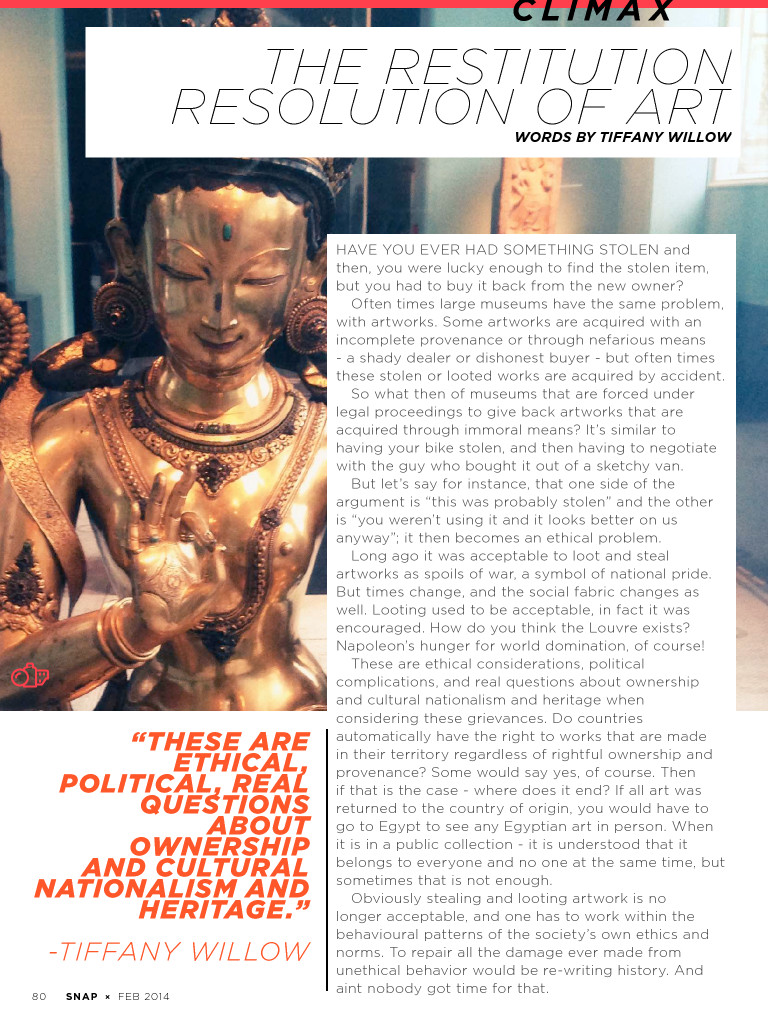
Often times large museums have the same problem, with artworks. Some artworks are acquired with an incomplete provenance or through nefarious means - a shady dealer or dishonest buyer - but often times these stolen or looted works are acquired by accident. So what then of museums that are forced under legal proceedings to give back artworks that are acquired through immoral means? It’s similar to having your bike stolen, and then having to negotiate with the guy who bought it out of a sketchy van. But let’s say for instance, that one side of the argument is “this was probably stolen” and the other is “you weren’t using it and it looks better on us anyway”; it then becomes an ethical problem. Long ago it was acceptable to loot and steal artworks as spoils of war, a symbol of national pride. But times change, and the social fabric changes as well. Looting used to be acceptable, in fact it was encouraged. How do you think the Louvre exists? Napoleon’s hunger for world domination, of course! These are ethical considerations, political complications, and real questions about ownership and cultural nationalism and heritage when considering these grievances. Do countries automatically have the right to works that are made in their territory regardless of rightful ownership and provenance? Some would say yes, of course. Then if that is the case - where does it end? If all art was returned to the country of origin, you would have to go to Egypt to see any Egyptian art in person. When it is in a public collection - it is understood that it belongs to everyone and no one at the same time, but sometimes that is not enough.
Obviously stealing and looting artwork is no longer acceptable, and one has to work within the behavioural patterns of the society’s own ethics and norms. To repair all the damage ever made from unethical behavior would be re-writing history. And aint nobody got time for that.