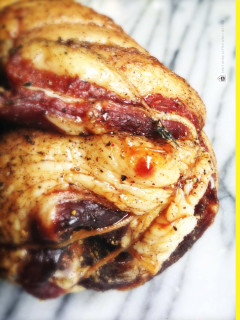
Hog Heaven
cultured
Hipstamatic’s web magician, Jeremy Boles, comes from behind the computer and into the kitchen to share one of his secret recipes for mouthwatering pancetta
Earlier this year, my family spent a month in Lucca, Italy. Aside from the beautiful countryside, amazing wine, and wonderful pizzerias, the thing that I probably miss the most is the salumerie, or delis, that have their cured meats displayed in the windows. This recipe for pancetta, which is the Italian technique for curing pork belly, will get you very close to what you’d find in Italy, complete with rolls of meat hanging from the corner of your kitchen.
ingredients:
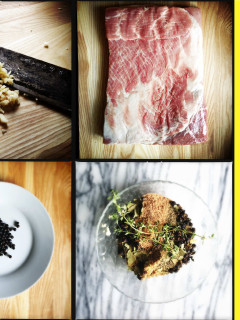
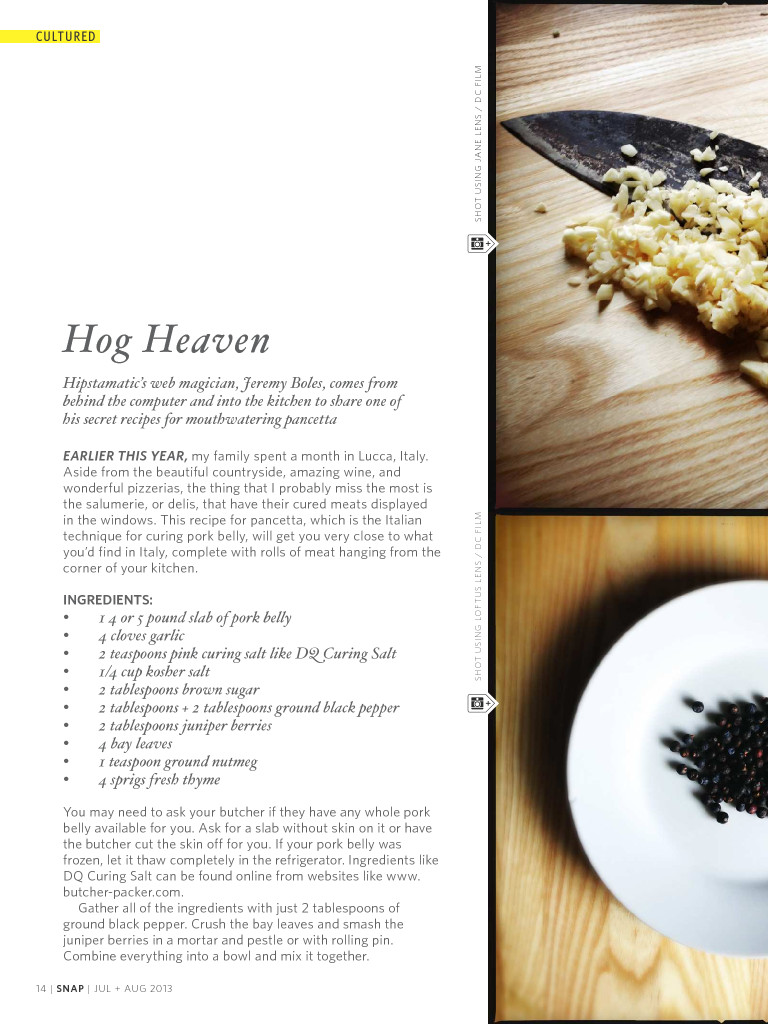
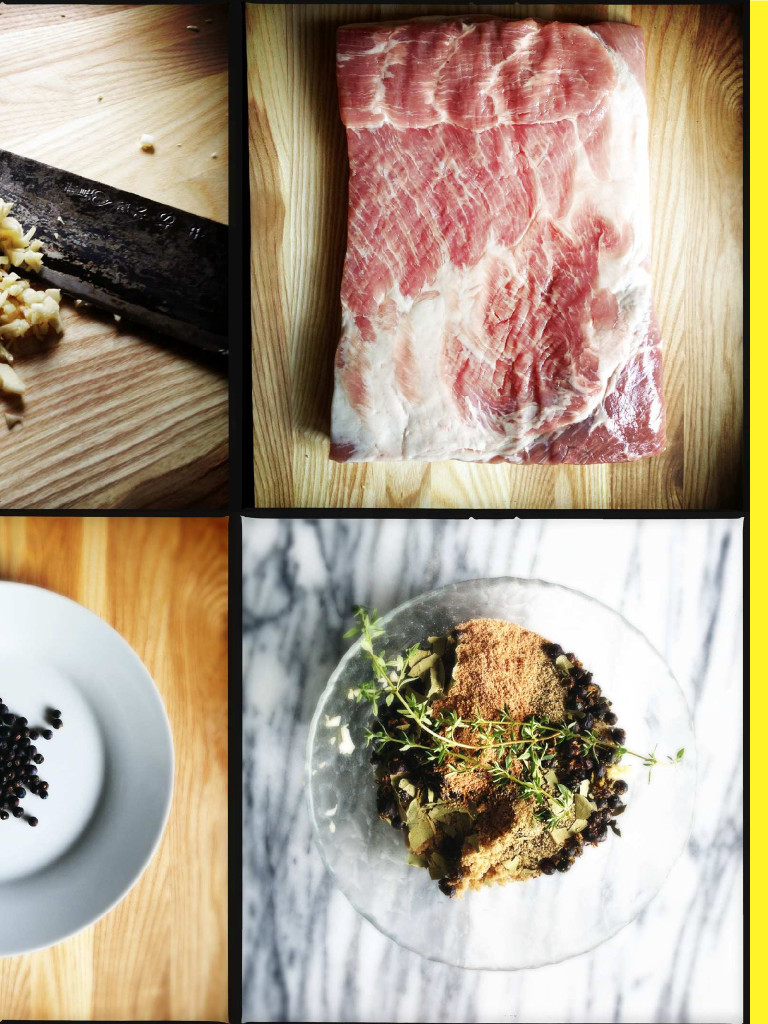
• 1 4 or 5 pound slab of pork belly • 4 cloves garlic • 2 teaspoons pink curing salt like DQ Curing Salt • 1/4 cup kosher salt • 2 tablespoons brown sugar • 2 tablespoons + 2 tablespoons ground black pepper • 2 tablespoons juniper berries • 4 bay leaves • 1 teaspoon ground nutmeg • 4 sprigs fresh thyme
You may need to ask your butcher if they have any whole pork belly available for you. Ask for a slab without skin on it or have the butcher cut the skin off for you. If your pork belly was frozen, let it thaw completely in the refrigerator. Ingredients like DQ Curing Salt can be found online from websites like www. butcher-packer.com.
Gather all of the ingredients with just 2 tablespoons of ground black pepper. Crush the bay leaves and smash the juniper berries in a mortar and pestle or with rolling pin. Combine everything into a bowl and mix it together.
cultured
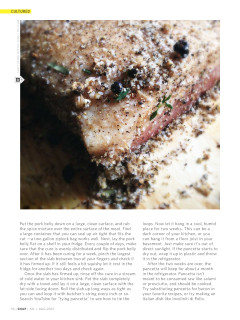
Put the pork belly down on a large, clean surface, and rub the spice mixture over the entire surface of the meat. Find a large container that you can seal up air tight that fits the cut —a two gallon ziplock bag works well. Next, lay the pork belly flat on a shelf in your fridge. Every couple of days, make sure that the cure is evenly distributed and flip the pork belly over. After it has been curing for a week, pinch the largest section of the slab between two of your fingers and check if it has firmed up. If it still feels a bit squishy let it rest in the fridge for another two days and check again.
Once the slab has firmed up, rinse off the cure in a stream of cold water in your kitchen sink. Pat the slab completely dry with a towel and lay it on a large, clean surface with the fat-side facing down. Roll the slab up long ways as tight as you can and loop it with butcher’s string every inch or so. Search YouTube for “tying pancetta” to see how to tie the loops. Now let it hang in a cool, humid place for two weeks. This can be a dark corner of your kitchen, or you can hang it from a floor joist in your basement. Just make sure it’s out of direct sunlight. If the pancetta starts to dry out, wrap it up in plastic and throw it in the refrigerator.
After the two weeks are over, the pancetta will keep for about a month in the refrigerator. Pancetta isn’t meant to be consumed raw like salami or prosciutto, and should be cooked. Try substituting pancetta for bacon in your favorite recipes, or try making an Italian dish like Involiniti di Pollo.