
The Forbidden Island of Cuba

Thoughts by Rheanna Martinez
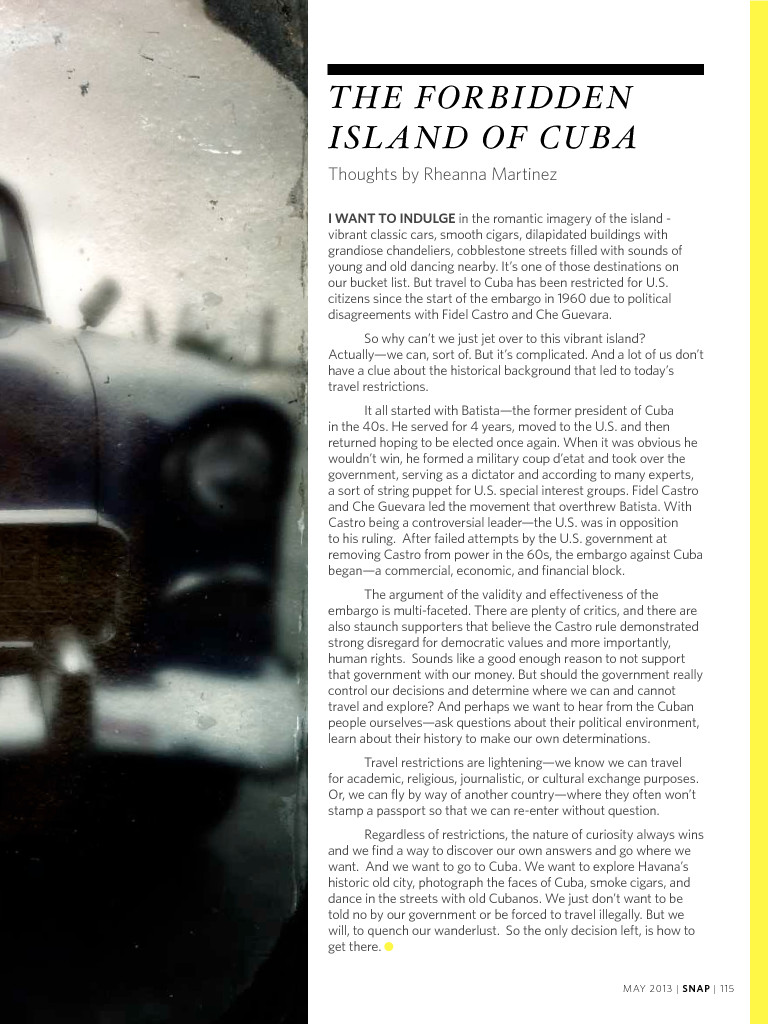
I want to indulge in the romantic imagery of the island - vibrant classic cars, smooth cigars, dilapidated buildings with grandiose chandeliers, cobblestone streets filled with sounds of young and old dancing nearby. It’s one of those destinations on our bucket list. But travel to Cuba has been restricted for U.S. citizens since the start of the embargo in 1960 due to political disagreements with Fidel Castro and Che Guevara.
So why can’t we just jet over to this vibrant island? Actually—we can, sort of. But it’s complicated. And a lot of us don’t have a clue about the historical background that led to today’s travel restrictions.
It all started with Batista—the former president of Cuba in the 40s. He served for 4 years, moved to the U.S. and then returned hoping to be elected once again. When it was obvious he wouldn’t win, he formed a military coup d’etat and took over the government, serving as a dictator and according to many experts, a sort of string puppet for U.S. special interest groups. Fidel Castro and Che Guevara led the movement that overthrew Batista. With Castro being a controversial leader—the U.S. was in opposition to his ruling. After failed attempts by the U.S. government at removing Castro from power in the 60s, the embargo against Cuba began—a commercial, economic, and financial block.
The argument of the validity and effectiveness of the embargo is multi-faceted. There are plenty of critics, and there are also staunch supporters that believe the Castro rule demonstrated strong disregard for democratic values and more importantly, human rights. Sounds like a good enough reason to not support that government with our money. But should the government really control our decisions and determine where we can and cannot travel and explore? And perhaps we want to hear from the Cuban people ourselves—ask questions about their political environment, learn about their history to make our own determinations. Travel restrictions are lightening—we know we can travel for academic, religious, journalistic, or cultural exchange purposes. Or, we can fly by way of another country—where they often won’t stamp a passport so that we can re-enter without question. Regardless of restrictions, the nature of curiosity always wins and we find a way to discover our own answers and go where we want. And we want to go to Cuba. We want to explore Havana’s historic old city, photograph the faces of Cuba, smoke cigars, and dance in the streets with old Cubanos. We just don’t want to be told no by our government or be forced to travel illegally. But we will, to quench our wanderlust. So the only decision left, is how to get there.