Essentials for Capturing a Room
Photographer Alexander Winter walks us through getting the perfect interior shot
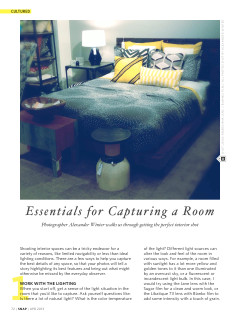
Shooting interior spaces can be a tricky endeavor for a variety of reasons, like limited navigability or less than ideal lighting conditions. There are a few ways to help you capture the best details of any space, so that your photos will tell a story highlighting its best features and bring out what might otherwise be missed by the everyday observer.
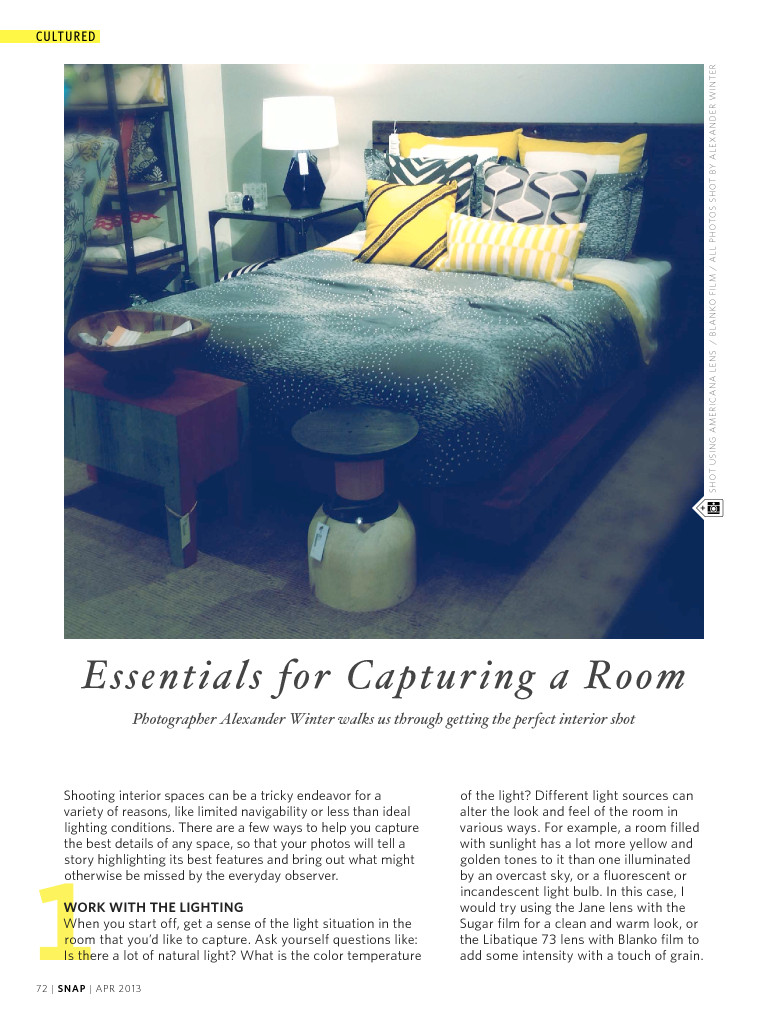
Work with the lighting When you start off, get a sense of the light situation in the room that you’d like to capture. Ask yourself questions like: Is there a lot of natural light? What is the color temperature of the light? Different light sources can alter the look and feel of the room in various ways. For example, a room filled with sunlight has a lot more yellow and golden tones to it than one illuminated by an overcast sky, or a fluorescent or incandescent light bulb. In this case, I would try using the Jane lens with the Sugar film for a clean and warm look, or the Libatique 73 lens with Blanko film to add some intensity with a touch of grain.
If you are going for a cooler look, the Americana lens will be a good start, which will also give you a slight blur to the edge for a crisper appearance of the object you’re focusing on. Or, lose the color all together and use the Claunch 72 Monochrome or AO BW film with, say, either the Kaimal Mark II or John S lens. That way you can focus more on the shadows of the objects and on their textures, without having to worry about the right color temperature.
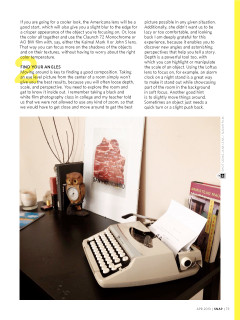
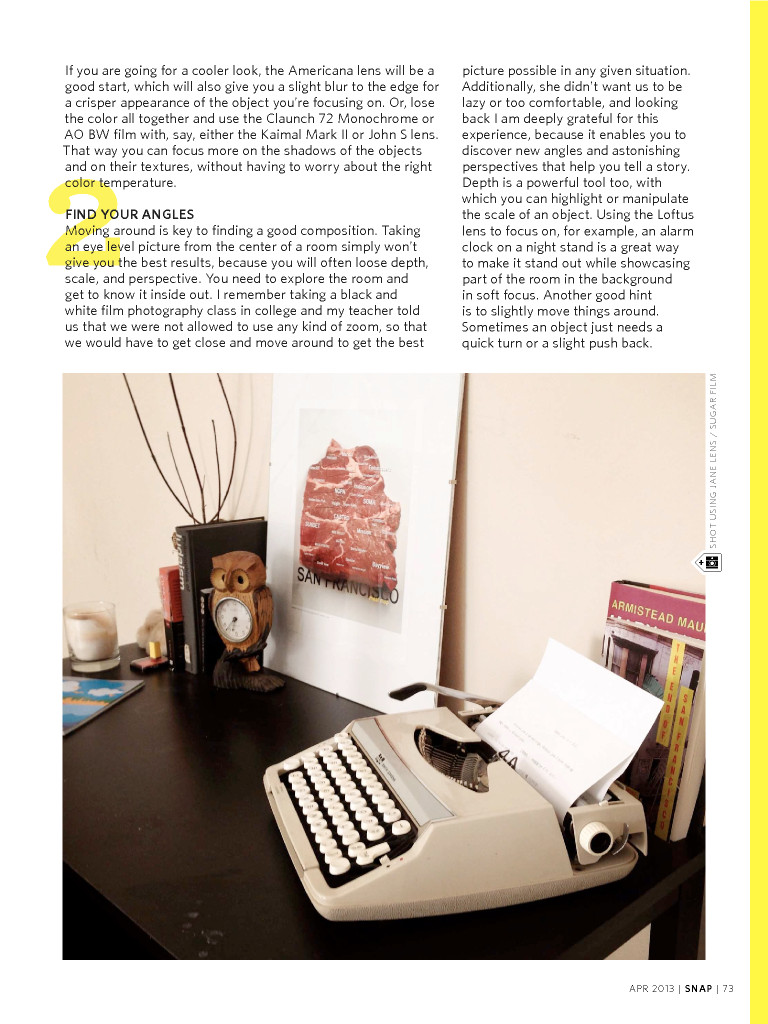
Find your angles Moving around is key to finding a good composition. Taking an eye level picture from the center of a room simply won’t give you the best results, because you will often loose depth, scale, and perspective. You need to explore the room and get to know it inside out. I remember taking a black and white film photography class in college and my teacher told us that we were not allowed to use any kind of zoom, so that we would have to get close and move around to get the best picture possible in any given situation.
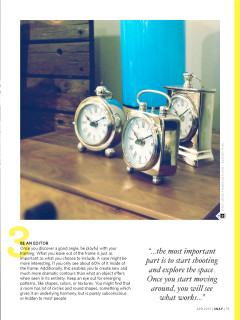
Additionally, she didn’t want us to be lazy or too comfortable, and looking back I am deeply grateful for this experience, because it enables you to discover new angles and astonishing perspectives that help you tell a story. Depth is a powerful tool too, with which you can highlight or manipulate the scale of an object. Using the Loftus lens to focus on, for example, an alarm clock on a night stand is a great way to make it stand out while showcasing part of the room in the background in soft focus. Another good hint is to slightly move things around. Sometimes an object just needs a quick turn or a slight push back.
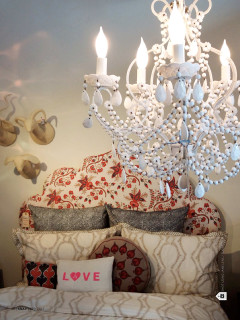
Be an Editor Once you discover a good angle, be playful with your framing. What you leave out of the frame is just as important as what you choose to include. A vase might be more interesting, if you only see about 60% of it inside of the frame. Additionally, this enables you to create new and much more dramatic contours than what an object offers when seen in its entirety. Keep an eye out for emerging patterns, like shapes, colors, or textures. You might find that a room has lot of circles and round shapes, something which gives it an underlying harmony, but is purely subconscious or hidden to most people.
“...the most important part is to start shooting and explore the space. Once you start moving
Around, You Will See What Works...”
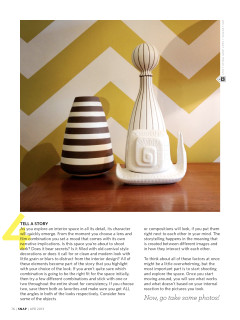
Tell a Story As you explore an interior space in all its detail, its character will quickly emerge. From the moment you choose a lens and film combination you set a mood that comes with its own narrative implications. Is this space you’re about to shoot dark? Does it bear secrets? Is it filled with old carnival style decorations or does it call for or clean and modern look with little grain or blurs to distract from the interior design? All of these elements become part of the story that you highlight with your choice of the look. If you aren’t quite sure which combination is going to be the right fit for the space initially, then try a few different combinations and stick with one or two throughout the entire shoot for consistency. If you choose two, save them both as favorites and make sure you get ALL the angles in both of the looks respectively. Consider how some of the objects or compositions will look, if you put them right next to each other in your mind. The storytelling happens in the meaning that is created between different images and in how they interact with each other.
To think about all of these factors at once might be a little overwhelming, but the most important part is to start shooting and explore the space. Once you start moving around, you will see what works and what doesn’t based on your internal reaction to the pictures you took.