
Ethiopia Utopia
Hipstamatic photographer Lisa Bentinck travelled to Northern Ethiopia to capture the country’s untold stories
I was continually astounded by the common perception of Ethiopia, due in no small part to the 1984 famine and the current reality of it’s rich cultural history and overwhelming beauty both of it’s people and it’s landscapes. Ethiopia has often been called the original home of mankind due to humanoid fossil discoveries like the Australopithecine Lucy. North eastern Africa, and the Afar region in particular, was the central focus of these claims until recent DNA evidence suggested origins in south central Ethiopian regions like present-day Addis Ababa. After analysing the DNA of almost 1,000 people around the world, geneticists and other scientists claimed that people spread from what is now Addis Ababa 100,000 years ago.
Gondar I found the former capital of Ethiopia a rich mix of giddy school children and vast palace complexes. Gondar was founded by Emperor Fasilides around the year 1632. Once he became Emperor, Gondar grew as an agricultural and market town. The emperor also built a total of seven
churches, many still surviving today as well as Fasilides Castle a magnificent complex of castle buildings. Gondar remains a noted center of ecclesiastical learning of the Ethiopian Orthodox Tewahedo Church, and now has 44 churches. Gondar and its surrounding countryside constitute the homeland of most Ethiopian Jews.
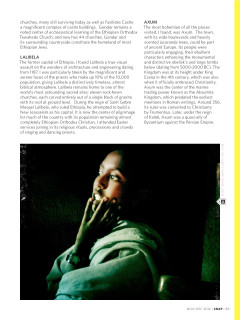
Lalibela The former capital of Ethiopia, I found Lalibela a true visual assault on the wonders of architecture and engineering dating from 1187. I was particularly taken by the magnificent and serene faces of the priests who make up 10% of the 10,000 population, giving Lalibela a distinctively timeless, almost biblical atmosphere. Lalibela remains home to one of the world’s most astounding sacred sites: eleven rock-hewn churches, each carved entirely out of a single block of granite with its roof at ground level. During the reign of Saint Gebre Mesqel Lalibela, who ruled Ethiopia, he attempted to build a New Jerusalem as his capital. It is now the center of pilgrimage for much of the country with its population remaining almost completely Ethiopian Orthodox Christian. I attended Easter services joining in its religious rituals, processions and crowds of singing and dancing priests.
Axum The most bohemian of all the places visited, I found, was Axum. The town, with its wide boulevards and heavily scented jacaranda trees, could be part of ancient Europe. Its people were particularly engaging, their ebullient characters enhancing the monumental and distinctive obelisk’s and large tombs below (dating from 5000-2000 BC). The Kingdom was at its height under King Ezana in the 4th century, which was also when it officially embraced Christianity. Axum was the center of the marine trading power known as the Aksumite Kingdom, which predated the earliest mentions in Roman writings. Around 356, its ruler was converted to Christianty by Frumentius. Later, under the reign of Kaleb, Axum was a quasi-ally of Byzantium against the Persian Empire.
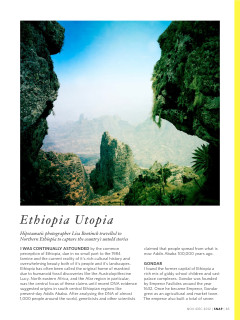
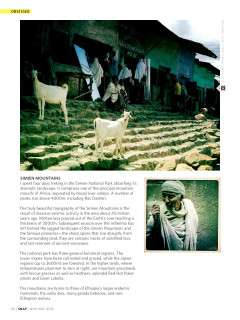
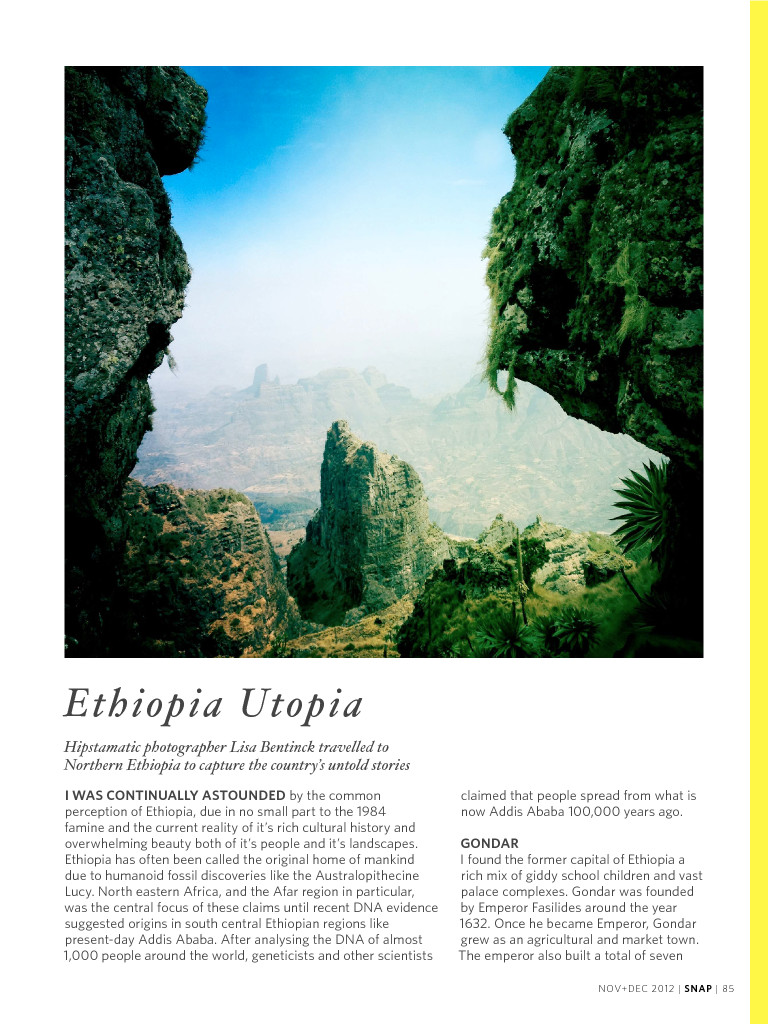
Simien mountains I spent four days treking in the Simien National Park absorbing its dramatic landscape. It comprises one of the principal mountain massifs of Africa, separated by broad river valleys. A number of peaks rise above 4000m, including Ras Dashen.
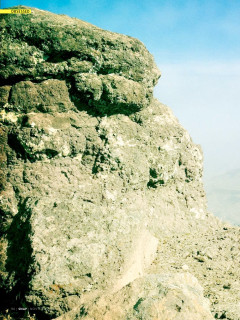
The truly beautiful topography of the Simien Mountains is the result of massive seismic activity in the area about 40 million years ago. Molten lava poured out of the Earth’s core reaching a thickness of 3000m. Subsequent erosion over the millennia has left behind the jagged landscape of the Simien Mountains and the famous pinnacles—the sharp spires that rise abruptly from the surrounding land, they are volcanic necks of solidified lava and last remnant of ancient volcanoes.
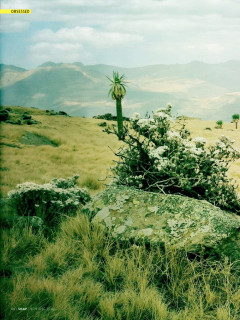
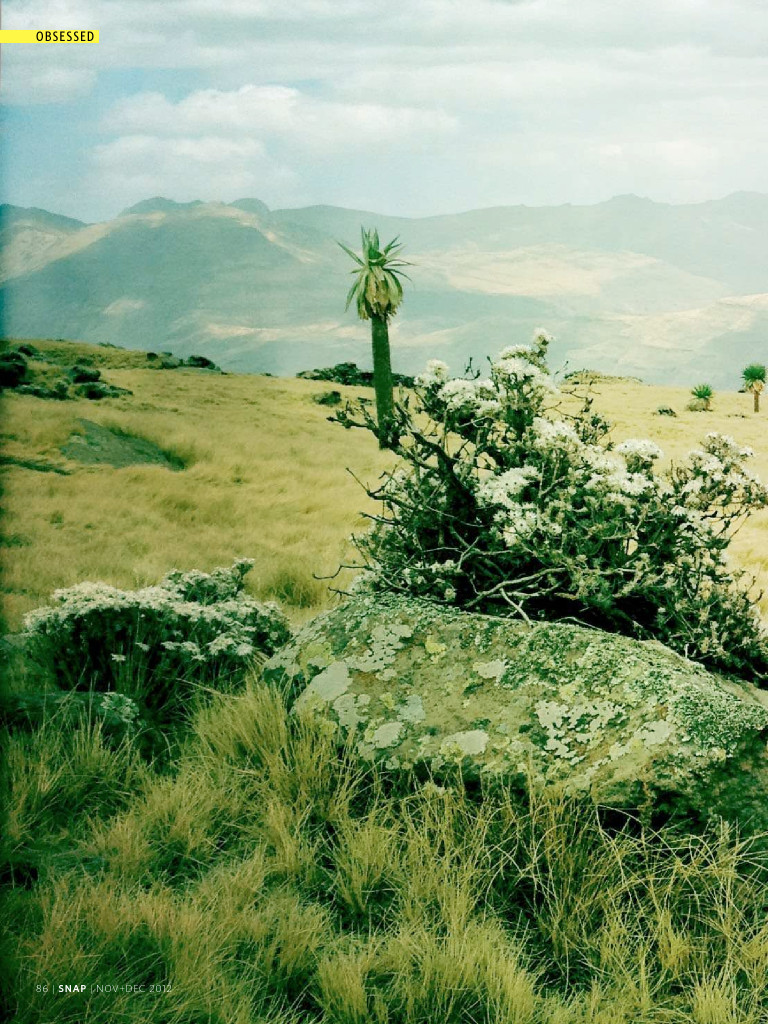
The national park has three general botanical regions. The lower slopes have been cultivated and grazed, while the alpine regions (up to 3600m) are forested. In the higher lands, where temperatures plummet to zero at night, are mountain grasslands with fescue grasses as well as heathers, splendid Red Hot Poker plants and Giant Lobelia.
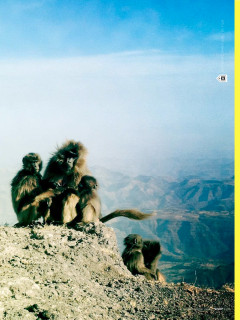
The mountains are home to three of Ethiopia’s larger endemic mammals: the walia ibex, many gelada baboons, and rare Ethiopian wolves.