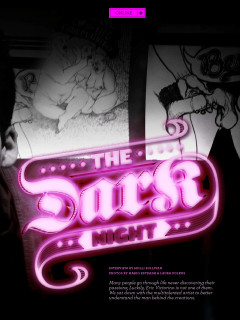
The Dark Night
The Limousines frontman, Eric Victorino, talks about his banishment from Etsy.com and what drives him to create.
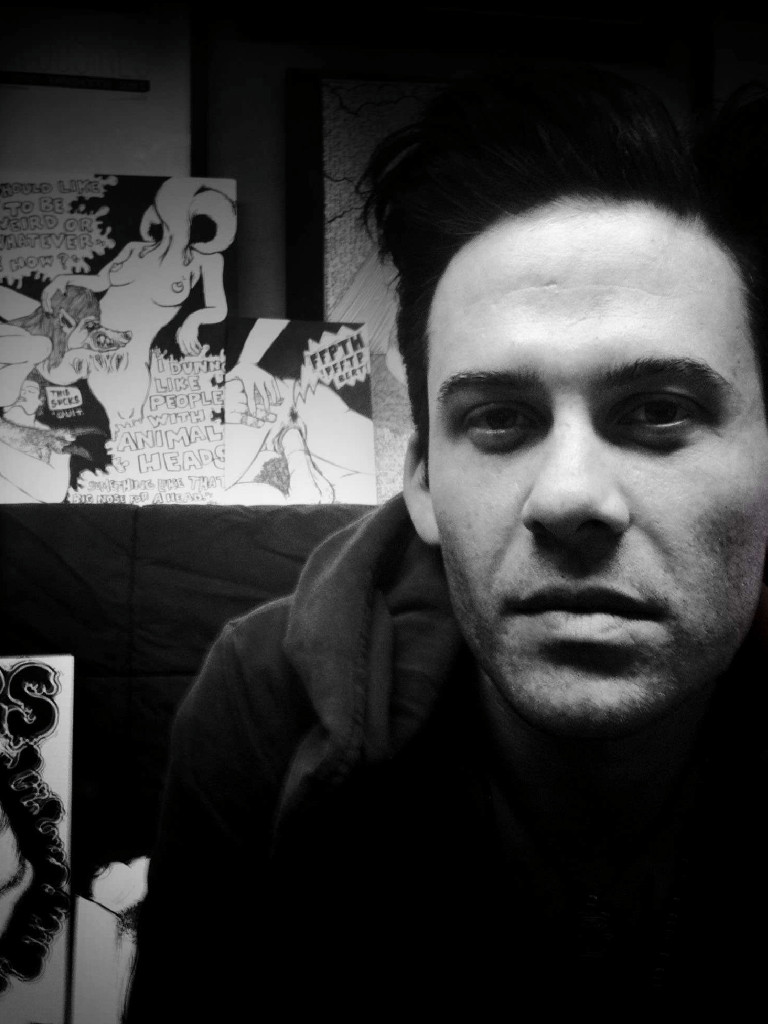
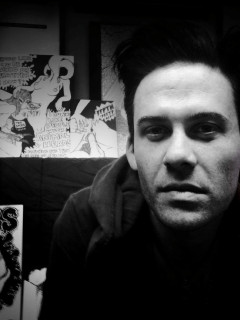
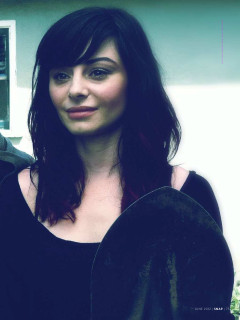
Many people go through life never discovering their passions; Luckily, Eric Victorino is not one of them. We sat down with the multitalented artist to better understand the man behind the creations.
On the surface, Los Gatos, California epitomizes suburbia. Cute restaurants, expensive houses, lush landscaping—it feels like the place where husbands and wives retreat to build white picket fences and raise 2.5 kids. But things aren’t always what they seem, and this little town has a secret: it’s been hiding the multi-talented and provocative artist, Eric Victorino.
In fact, you may have heard of him. Victorino is one half of the The Limousines (www.thelimousines.com), the Bay Area electro-pop band he started with producer Gio Giusti. They play sold out shows across the U.S., and their debut album, Get Sharp, has been featured on XM radio’s Alt Nation and a slew of MTV shows. Last year, their hit “Internet Killed the Video” star was (appropriately) a viral Internet sensation.
However, perhaps what’s most interesting about Victorino is what you don’t know. Tucked away in the suburbs, Victorino has created an incredibly honest, beautiful, and provocative body of work that spans books, posters, zines, and more.
I drive an hour from San Francisco to Victorino’s house in Los Gatos for a photo shoot. At first glance, the exterior feels like it could belong to any nine-to-fiver newlyweds, but step inside you’re transported into another world. A creator’s sanctuary.
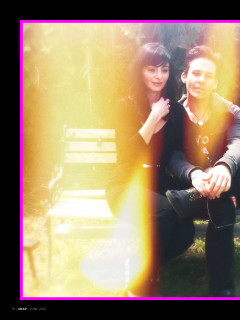
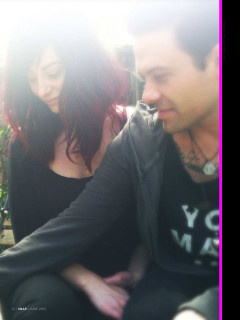
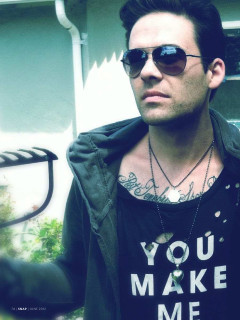
Victorino greets us at the door. He’s welcoming, and even in a tattered t-shirt, extremely handsome. He gives us a tour of his home, which feels more like an art installation than a house. Oil and acrylic pantings from Good Will, a portrait of his grandfather, 1970’s photographs of naked women. Candlesticks, sculptures and frames dress the fireplace mantel. A 1920’s telephone sits next to an 80’s era boombox. This is a home of an artist. We’ve been lucky enough to chat with Eric about his projects, including his latest book, Trading Sunshine for Shadows, where he explores grappling with mental illness and suicide, and his posters that got him into an epic Twitter fight with Etsy.
From writing to drawing to music making, what drives you to create?
I love to make things because it makes me feel good. It makes me feel like a kid. When we’re little kids we’re all encouraged to be creative. Nobody laughs at a six year old who says they want to be an artist when they grow up any more than they laugh when a kid says they wanna be an astronaut, but as we grow up more and more people start to discourage our imagination. Parents and teachers tell kids they have to grow up and stop thinking they’re going to be artists or singers or writers and they always tell them to have a “back-up plan.” It just kills me to think of how many people grow up thinking they can’t sing or they can’t draw or they can’t write because they aren’t singers or artists or authors. You become a singer when you sing, you become an artist when you make art, and you become an author when you write.
You’re one of those people who embodies creativity and art. Where do you draw inspiration? Does it change for each medium?
I feel my most calm when I’m drawing. I usually use fine and fat-tipped sharpies when I draw and most of my pieces have a lot of filled-in space. Focusing on that task, methodically filling in black space is like meditating for me. I really blank out and get into the rhythm of it. With poetry, I’m mostly listening to my thoughts—which is a strange thing to think about. I’m not thinking, I’m listening to my thoughts. A lot of times the writing is kind of automatic, in that I’m not consciously deciding what I’m going to type. If I think it’s bad when it’s done I either fix it or throw it away, but I’m never editing while I’m writing. Just like in a dark room, you wait for the chemicals to do what they do and you see what image develops. My books are what I am most proud of, not because they’re of any historically significant literary value, but because I know they’ve helped a lot of people get through tough times. I see it firsthand when people send me thank-you letters saying something they read in one of my poems pulled them out of a depression or inspired them to live a different life. I’m inspired by that urge to matter to people, almost to an unhealthy extent I think. Music is the most frustrating thing for me to create, I think because I just don’t understand it. I never took a music class, so I don’t know shit—when something just clicks I know it, but I don’t know why anything ever clicks or why sometimes it doesn’t click. Doing music also has a way of just consuming everything in my life, so I resent it a lot of the time. I pretty much hate everything about making music except that magical rush of performing live.
When did you start writing, and why?
I started writing when I was in elementary school. The first story I remember writing was about these crazy colored fuzz balls who lived under a kid’s bed. I think they were called Fuzzies, and they came to life and went to school with him in his backpack and they beat up bullies and helped the kid cheat on a math test. I could be missing some of the details, my mom probably has the thing in a box somewhere. I won a $50 gift certificate to a local book store with that story! I can’t remember a time in my life when I didn’t have a journal and a pen on me. I can’t remember a single time when I didn’t think it was important to write down my thoughts; at the very least they could be interesting to my kids someday, flipping through stacks of papers and little notebooks their dad left behind.
I wrote my first book of poems because my mom got cancer in 2005 and it scared the shit out of me. I think it was the first time I really put it together in my head, my mother was going to die—if not from this cancer then from something, and I didn’t think I could bear to go through that. Then I thought about [my wife] Sarah dying and my friends, even my dog. Then, of course me—I was going to die too and it could be at any minute. I mean, I have always known that, but seeing my mom get sick made me intimately aware of death.
For whatever reason what I needed to do to get through that weird time in my life was to pour myself into a project that was just mine. Maybe if I wasn’t such a shitty guitar player I would have recorded a folky solo album or something, but since that wasn’t an option I just wrote like it was the only thing that mattered to me. For a few weeks, it really was; it gave me a place to go where I didn’t feel so temporary.
Tell us about your new book, Trading Sunshine For Shadows.
I released Trading Shadows For Sunshine during a strange transition in my life. I had quit my band (Strata) and was working in an office doing design work. My plan was to leave music in the past, to try and be content with a ‘normal’ life. I was proud of the book at first; I thought of it as the last creative thing I would release. I experimented with fictional short stories, which I don’t think are bad, they’re just not true. Each poem I wrote felt a little bit false—like I was sugar-coating things, and trying to put a positive spin on what should have just been left raw...unhappy endings and all.
Trading Shadows For Sunshine was out of print for a while, and people kept asking when it would be in stock again, but I wasn’t proud enough of my work to reprint it as it was. That got me thinking of re-writing the entire book, removing a lot of the fictional stories and expressing the truly dark parts of my emotions. It got to be so dark in the end that I decided switching the title to Trading Sunshine For Shadows made more sense than to call this a re-release of a previous book. The feeling is completely different.
The cover feels deeply personal. What’s the story behind the image?
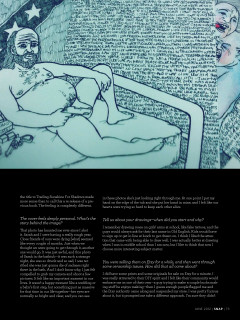
That photo has haunted me ever since I shot it. Sarah and I were having a really rough year. Close friends of ours were dying [what] seemed like every couple of months. Just when we thought we were going to get through it, another one would go. It was just awful, and this photo of Sarah in the bathtub—it was such a strange night, she was so drunk and so sad, I was terrified she was just gonna die of sadness right there in the bath. And I don’t know why, I just felt compelled to grab my camera and shoot a few pictures. It felt like an important moment in our lives. It wasn’t a happy moment like a wedding or a baby’s first step, but something just as massive for that time in our life together—her eyes are normally so bright and clear, and you can see in these photos she’s just looking right through me. At one point I put my hand on the edge of the tub and she put her hand in mine, and I felt like our hearts were trying so hard to keep each other alive.
Tell us about your drawings—when did you start and why?
I remember drawing roses on girls’ arms at school, like fake tattoos, and the guys would always ask for their last name in Old English. Kids would have to sign up or get in line at lunch to get drawn on. I think I liked the attention that came with being able to draw well. I was actually better at drawing when I was in middle school than I am now, but I like to think that now I choose more interesting subject matter.
You were selling them on Etsy for a while, and then went through some censorship issues. How did that all come about?
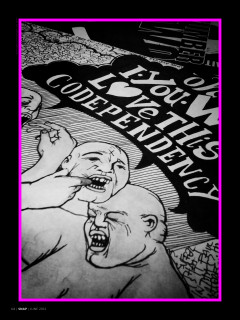
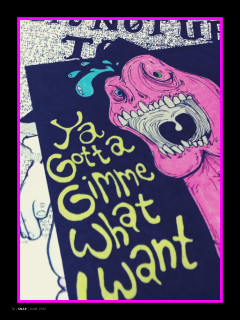
I did have some prints and some originals for sale on Etsy for a minute. I was really attracted to their DIY spirit and I felt like their community would embrace me as one of their own—a guy trying to make a couple bucks making stuff he enjoys making—then I guess enough people flagged me and the Etsy authority came along and suspended my store. I was pretty furious about it, but it prompted me take a different approach. I’m sure they didn’t even notice the commotion I thought I was making, but I worked up a photocopied zine full of my drawings and I called it Self Portrait—since the cover was a picture I drew of my own dick.
Now you have zines—tell us about those.
Self Portrait is the title of a zine I put out periodically—and by that I mean, whenever I feel like it. Number Two was thrown together in the middle of a mania/depression that nearly ended my life. It’s scary to look at it now, because I kinda blacked about a month out of my memory. Who knows what that thing looks like from the outside, but it’s another strange chapter of my life where I’m glad I made something in the midst of all the chaos.
Otherwise I might not have anything at all left to remind me how bad I can feel sometimes.
So many people know and love The Limousines. Can you talk about the direction of the new album, and how you’ve evolved since Get Sharp?
When we were recording Get Sharp we were just getting to know each other. We didn’t even know if we were going to be a band and take it seriously—we were just two guys passing ideas back and forth over email. We played our first couple shows midway through the creation of the album, so we started to see potential in moving away from the glitchy-electro stuff we started out doing and more toward big beats and songs we could sing with a few thousand friends.
Get Sharp is the sound of a band forming. We’ll see what happens with the next album; who knows if we’ll even finish it, or it could be amazing. That’s what’s so fun about the Limousines, we’re completely independent—nobody tells us what to do.